5:06
⭐ Premium
Founding Fathers
Ages all
George Mason's Brave Stand for a Bill of Rights
✍️ Written by TrueTales Editorial Team
🎙️ Narrated by Dorothy Mae
George Mason risked everything to win the rights every American holds today.
Read Along — Story Text
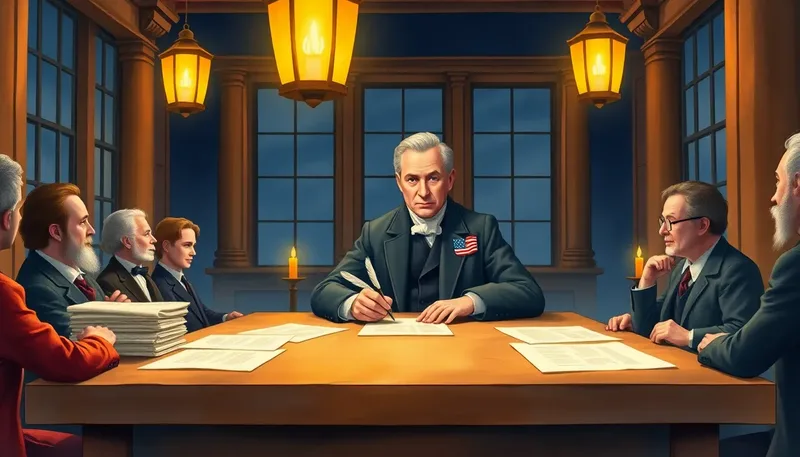
The summer of 1787 was hot and long in Philadelphia. The windows of the State House were nailed shut to keep the debates secret, and the air inside was thick and still. Fifty-five men had gathered from every corner of the new nation, and they had one enormous task: write a plan of government strong enough to hold thirteen states together, yet free enough to keep every citizen safe.
George Mason had traveled from Virginia, and his back ached from the long road. He was sixty-two years old, with silver hair and steady eyes that had seen a great deal of the world. Back home at Gunston Hall, his children called him a man who loved books almost as much as he loved his family. But George Mason also loved something else with all his heart: the rights of ordinary people.
For weeks, the men argued and voted and argued again. They built a Congress with two chambers. They shaped an executive, a presidency. They designed courts. Mason worked hard through every session, offering ideas and scratching notes in his neat, careful hand.
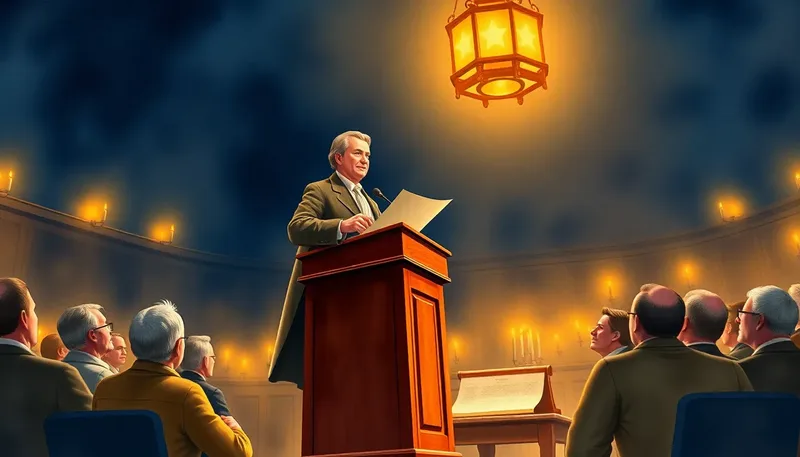
Then, near the end of summer, he rose to speak.
The room grew quiet.
"Gentlemen," Mason said, his voice firm but respectful, "we are about to hand this government great power. But I do not yet see anything in this plan that protects the people from that power. There is no list of the rights that belong to every citizen — the right to speak freely, to worship as one chooses, to face a fair trial."
Several men shifted in their chairs. They were tired. They wanted to go home. The Constitution, they said, was already a miracle.
But Mason would not sit down.
"I have written a declaration of rights for Virginia," he continued. "I know it can be done. Give us two weeks — only two weeks — and we can add a bill of rights to this document. If we send this plan to the people without one, I fear we shall leave the door to tyranny ajar."
The vote was called. His motion failed.
Mason stared at the parchment before him. On the final day, when every other Virginia delegate had signed, he laid down his pen. He could not put his name to a Constitution that left the people unguarded. It was one of the hardest moments of his long life. He knew men would call him a troublemaker. He knew they would say he had blocked a great achievement.
But George Mason believed that courage sometimes means standing alone.
He rode home to Gunston Hall and took up his pen again. He wrote pamphlets and letters to every corner of Virginia. He explained, in plain and simple words, what a bill of rights must say and why it mattered. He sent his arguments to James Madison, who had once disagreed with him. He sent them to Thomas Jefferson, far away in Paris, who wrote back that Mason was absolutely right.
Slowly, the country listened.
State after state demanded a bill of rights before they would agree to join the new nation. James Madison, moved by Mason's words and the voices of the people, sat down and drafted ten amendments. He worked carefully, borrowing many of Mason's own phrases almost word for word.
In 1791, those ten amendments were added to the Constitution. Americans called them the Bill of Rights.
Freedom of speech. Freedom of religion. The right to a fair trial. The right to be safe in your own home.
George Mason never lived to see every battle won. But he had planted something in the soil of the young republic that would grow for centuries: the idea that a government's first duty is to protect the people it serves.
Back at Gunston Hall, on quiet evenings, he would sit on the porch and listen to the wind in the trees, knowing he had done what was right — even when it was hard.
🇺🇸
Unlock 500+ Patriotic Stories
Faith, grit, and American pride — every single night for your family.
Start 7-Day Free TrialNo credit card required
✦ More Like This
Alexander Hamilton Writes the Letter That Saved John Laurens
5 min · Founding Fathers
Benjamin Franklin Builds the Bridge at the Convention
4 min · Founding Fathers
Alexander Hamilton and the Federalist Papers Race
5 min · Founding Fathers
John Jay Writes the Treaty That Saved the Peace
4 min · Founding Fathers
📄
Printable Activity Sheet
Discussion questions & fun facts for classroom or family time.
Download Activity Sheet →📖
Discussion Guide
Deepen the learning with questions, vocabulary, and historical context.
View Discussion Guides →💬
Discussion Questions
AI-generated conversation starters for after the story.